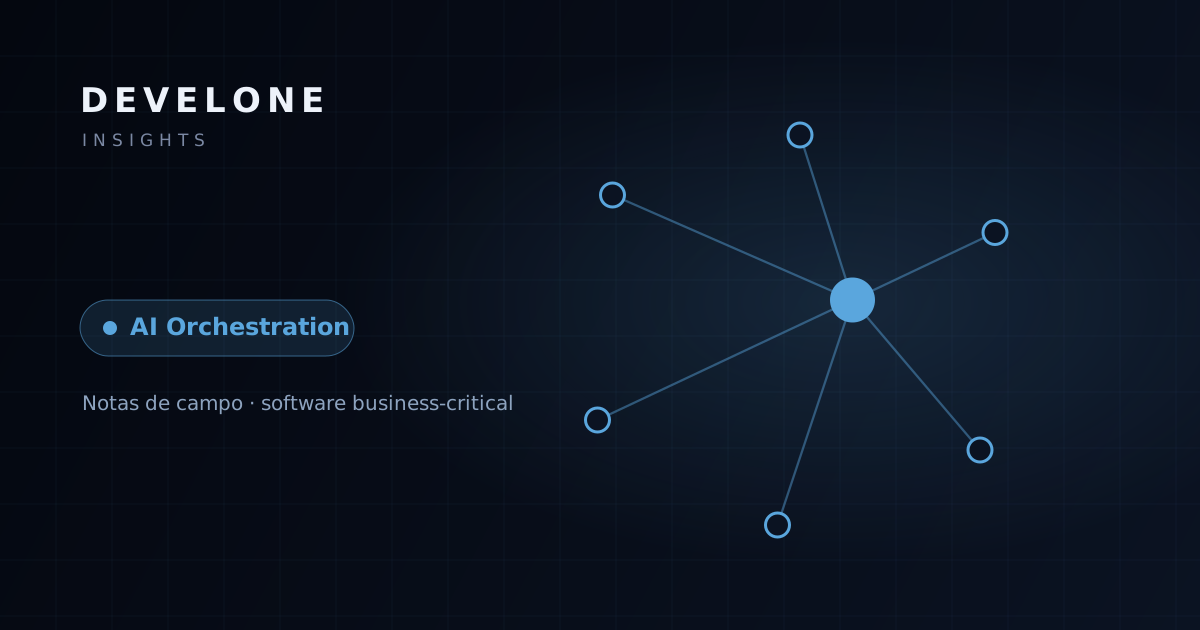
The interesting unit of AI automation isn't a single all-knowing assistant — it's a team of narrow agents coordinated by an orchestrator, each with its own tools and permission boundary. That's the architecture behind TITO, the platform we built to run our own operation.
An orchestrator, then specialists
A cheap router model receives the request in natural language, plans it and delegates to the right specialist: Dev writes code, DevOps deploys over SSH, Accounting issues electronic invoices, CRM works leads, Support handles tickets. Agents hand work off to each other through a queue with explicit policies (auto vs. approval), depth limits and cycle detection — so a delegation chain can't loop or run away.
Autonomy is a tier, not a toggle
Every action carries an autonomy tier. T1: the agent acts on its own (read-only, low risk). T2: it acts and tells you after. T3: it proposes, you approve, only then it executes — the default for anything destructive or external (deploys, payments, regulator filings). The gate lives at the data layer, not just the UI.
Everything is attributed and replayable
Each run is logged to an append-only audit trail with chained hashes covering config changes, deploys, filings, payments and approvals. Model routing is provider-agnostic — API, a local model at zero per-token cost, or a self-hosted one — with automatic failover, so no single vendor outage stops the line.
The result isn't a smarter chatbot. It's an operation you can actually delegate to, without giving up control.